
1. Why Castellón
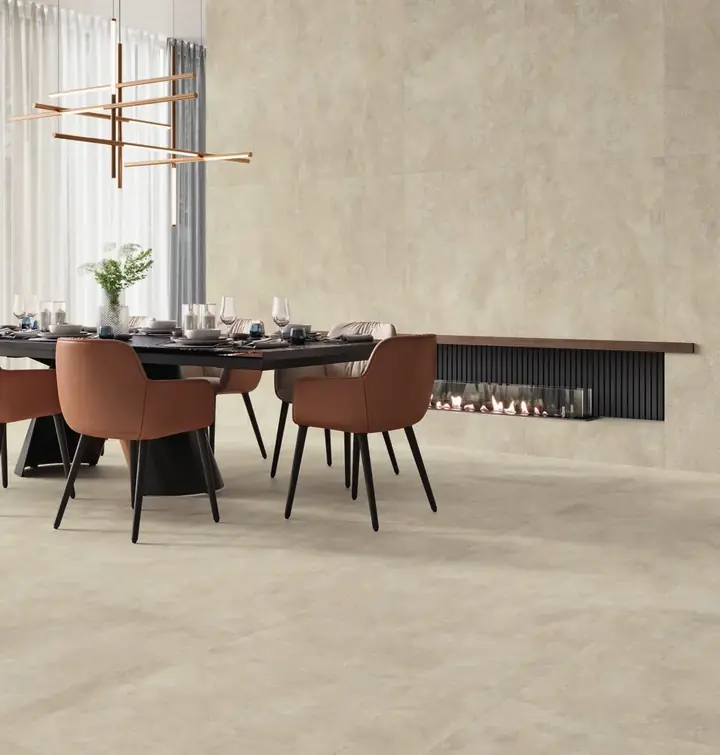
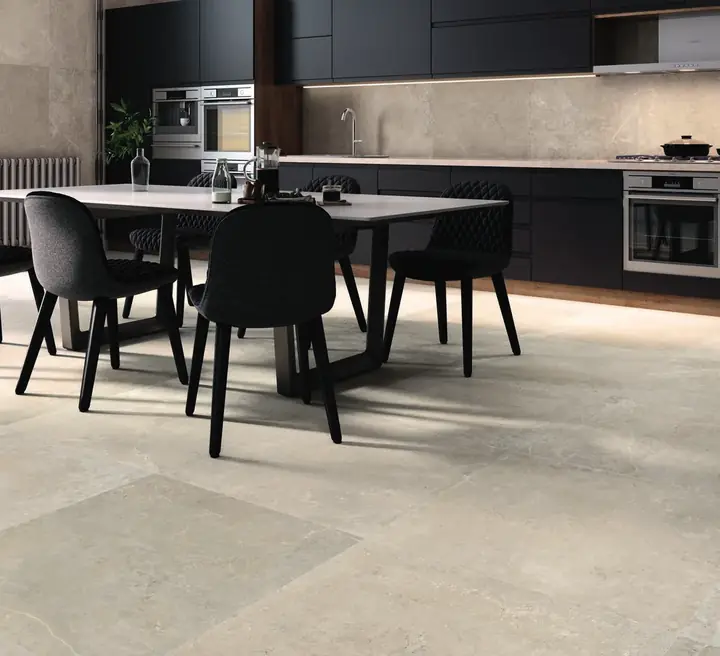
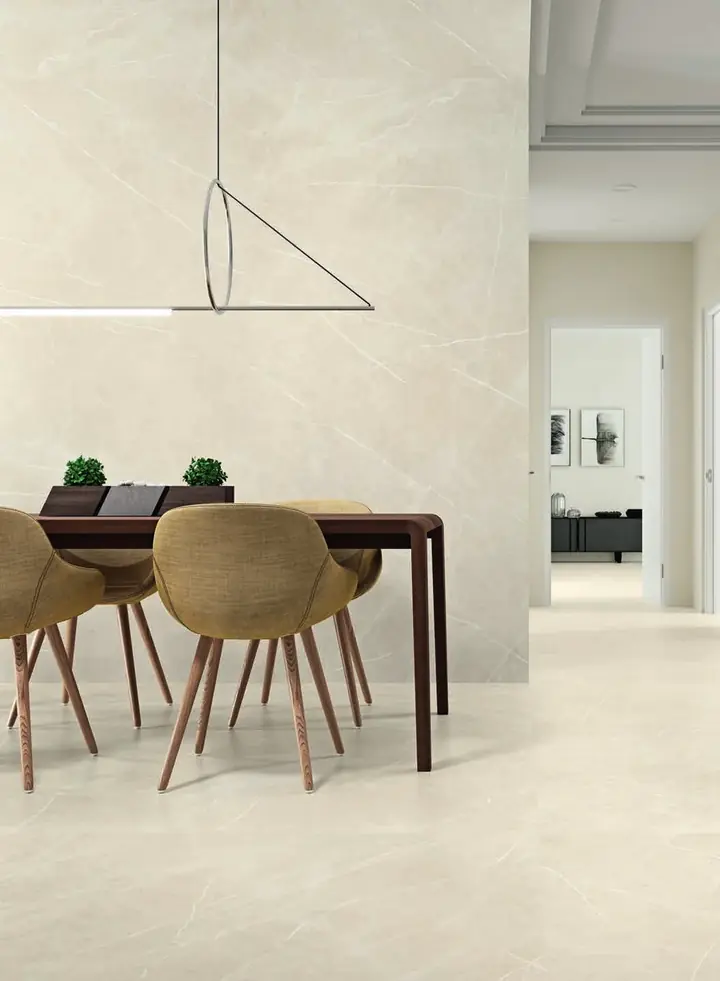
The province of Castellón concentrates most of Spain’s ceramic production and is one of the world’s main tile clusters. For a project, that means variety (wood, marble, stone, concrete and large formats from a single origin), capacity to supply large volumes from the same batch, and direct access to the port of Valencia.
2. How much fits in a container
Porcelain is heavy, so a container fills up by weight before volume. With roughly 24 tonnes of cargo, a 20 ft container takes about 1,150–1,650 m² depending on the format (about 1,200 m² in 60×120 cm). A 40 ft container allows barely more weight, which is why tiles ship in 20 ft containers.
You can work out the boxes, pallets, weight and containers for your project with our free m² and container calculator.
3. Usual documents
Exact requirements depend on the destination country and your customs broker, but a porcelain tile export usually involves:
- Commercial invoice and packing list with weights and m² per item.
- Bill of Lading issued by the shipping line.
- Certificate of origin where the destination requires it for preferential duties.
- CE marking (EN 14411), technical data sheets and, where relevant, UPEC classification or slip-resistance data for the project.
4. How to plan the order
Start with physical samples of the shortlisted collections and confirm formats, finishes and slip resistance with the architect. Then fix quantities with a 5–15 % margin for cuts and spares, and order all the material for one surface in a single order so it comes from the same shade batch.
Our minimum order for projects is 150 m² within Europe and one 20 ft container outside Europe. Lead times depend on stock and the shipping route, so we confirm them in writing with every quote.