1. Why does wood-effect porcelain outperform laminate and natural hardwood?
Wood-effect porcelain flooring combines the visual warmth of natural oak, walnut, or cedar with the technical durability of low-porosity porcelain stoneware (water absorption below 0.5%). Unlike natural hardwood or laminate, it never warps from moisture, resists scratches from daily traffic or pets, and requires zero sanding or varnishing.
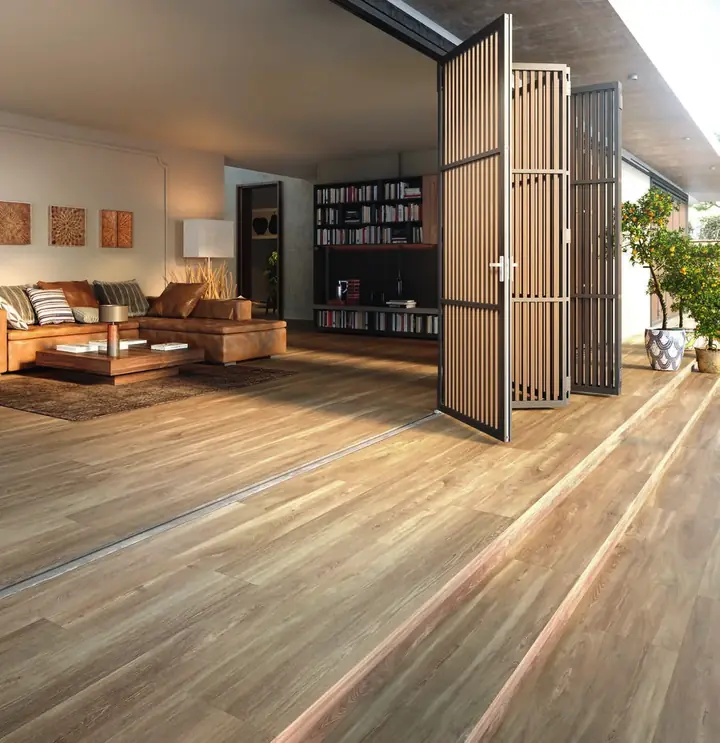
This allows you to install a single seamless floor across your entire home—including the living room, hallways, kitchen, bathrooms, and outdoor terraces—without transition strips or changes in level.
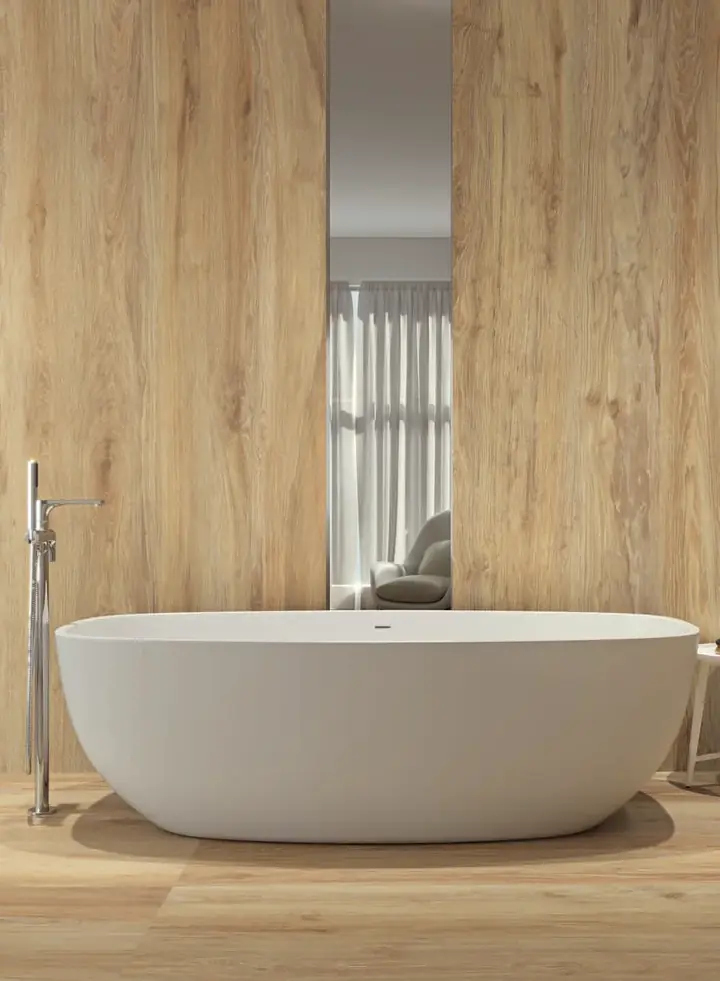
- 100% waterproof performance in bathrooms, showers, and kitchens.
- Superior thermal conductivity for underfloor heating and cooling systems.
- Rectified edges allowing minimal 1.5 mm grout joints matched to the wood shade.
- Elongated plank formats (20×120 cm, 23×120 cm) with realistic wood-grain texture.
2. How to choose the right wood shade for your room lighting
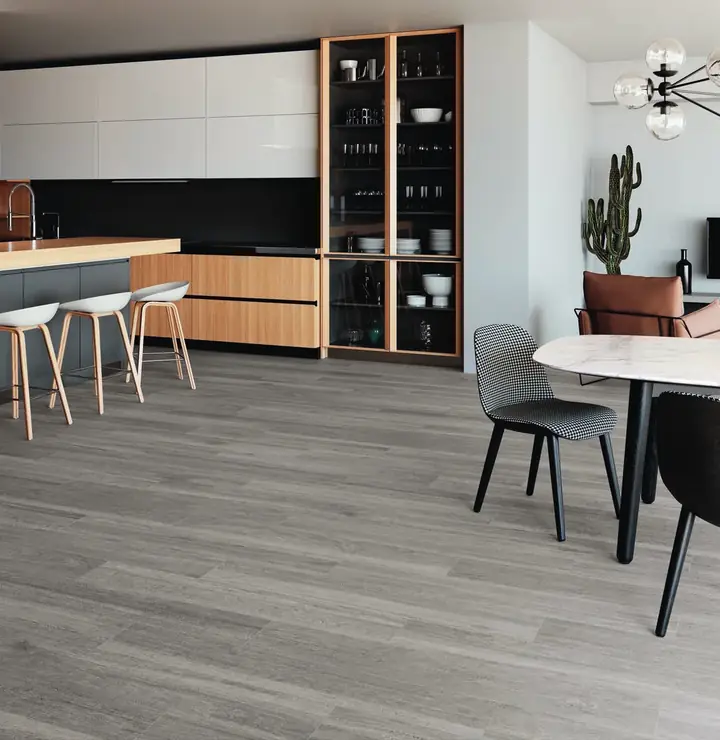
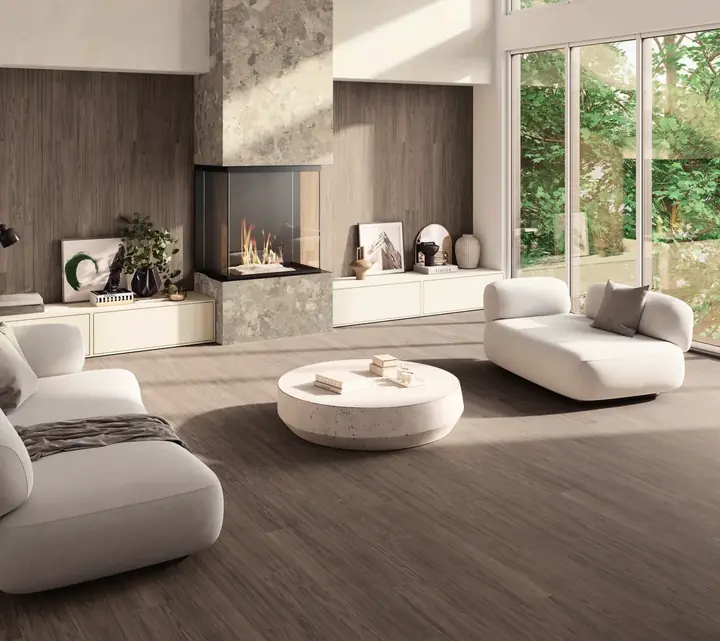
In rooms with limited natural light, soft honey, beech, bleached oak, or maple shades expand visual space and brightness. For spacious living areas with large windows, walnut, roasted cedar, or aged oak tones create a warm, architectural atmosphere.
If you are deciding between two shades, you can request home samples on our website (their cost is deducted from your order), labelled with the tile name and shade, to check them under your home’s real light.